I receive an update email from Stanford each morning. The banner states breaking news from the Farm since 1892. My friends kid me that I taught Wilbur and Orville how to fly. This column has nothing to do with how old I am, but rather owning a new airplane versus an older airplane and what is involved.
It is estimated that the piston fleet averages 45 years of age. These older airplanes are politely referred to as legacy aircraft. A good friend of mine defines legacy aircraft as any aircraft that does not have modern avionics. For the purpose of this column legacy aircraft will be considered older airframes.
There are two factors when considering purchasing a new aircraft versus a legacy aircraft. The first is very obvious being purchase price, and the second not so obvious being upkeep costs.
New fast piston aircraft run $750,000 to $1.5 million to purchase. This is a figure that is a little more than my house in Scottsdale is worth to double the price. There are two kinds of folks that can afford buy a new airplane. One is the business owner that is making money and can afford to write off the purchase and upkeep of the airplane. The other is someone who has done very well in life and can afford to buy a new plane. These planes now mostly come with a two year warranty and parts should be readily available. One would hope that at annul inspections very little work (squaks) will be need to be performed. The annual, without any squaks, cost more than a legacy airplane having to review all the new avionics and in some cases pressurization. Where the basic annual inspection can run $1,200 for a legacy airplane, the cost for a new airplane could be $4,000 to $11,000. Remember this is just the inspection cost and does not include any repairs. Insurance will cost more for a new plane as the hull value is much greater than for a legacy airplane. Figures of $7,000 to $11,000 are pretty close for insurance for a high time pilot. If you have fewer hours expect to pay more. Legacy aircraft insurance can run about $750 to $1200 a year.
You have decided that you cannot purchase a new go fast airplane. It is time to look for a legacy aircraft. There are many options and you can get a pretty good airplane in todays market for $50,000 to $100,000. One suggestion if you are purchasing a legacy aircraft is to try and buy one where the manufacture is still in business. Chances of parts availability go way up if this is the case, and if not you will be relegated to buying parts from salvaged aircraft. These part houses are mostly reputable, but the problem in buying a used part is you do not know it's condition and how long it will last. In some cases the salvage yards will give a 30 day guaranty on the part. They do not know if it will work or not, so you will have to have the part installed, and if it does not work pulled off and returned. This is why I recommend buying a used Piper, Cessna or Beechcraft airplane.
One negative of owing a legacy airplane is that maintenance is going to be more expensive than a new aircraft. There is always something wearing out on a legacy airplane that needs repairing or replacing. At annual, the cost as a percentage value of my airplane is high, but usually no higher than an annual inspection on a new airplane. Once you get used to that fact, you can own a very nice airplane that can fly at 115 to 175 knots.
One final thought is that when purchasing a legacy aircraft, have a mechanic that knows that airplane perform a pre-buy annual inspection. I do not care that the annual was completed yesterday....do your own annual. Also do not use a shop or mechanic on that field. Find your own A&P/IA and have the plane delivered to him. Have a separate contract with the seller that states seller to pay for anything found unairworthy, and if seller not willing to do that the seller pays for annual inspection performed to date.
Whichever airplane you are considering to purchase I wish you good enjoyment. It is hard to compare the joy one gets from owning their own airplane.
Tuesday, February 16, 2016


Thursday, January 14, 2016
AIRLINE PILOTS...GEEK OR PILOT
Airline Pilots can not hand fly an airplane any longer. This is no fault of their own, but it is the fault of the airlines. Airline Pilots are encouraged to turn on the autopilot, even in VFR conditions, around 400 feet above ground on take off and turn it off around 1000 feet above ground or lower upon landing. In Instrument conditions (IMC) the pilot has to use the autopilot. If the Pilot does not follow company procedures and there is an incident, that pilot is subject to being fired. All pilots flying above 28,000 feet are required to use the autopilot.
The above has led to the erosion of hand flying the airplane as airline pilots have lost their skills to do so. The only time a pilot is hand flying is in the simulator. Another factor in airline accidents is the way Boeing Airplanes are controlled versus Airbus Airplanes. Boeing has tradition yokes in their planes. When one pilot is pushing forward on the yoke in a Boeing, both yokes go forward. Airbus uses side sticks and fly by wire. If one pilot is pushing forward and the other is pulling back, then only one control input is being recognized. This is the worst setup I have ever seen, and am shocked it was allowed in certification and still being allowed. This situation has led to numerous accidents and deaths.
I have flown with many airline pilots throughout the years. I have found that the best airline pilots are those that own their own GA Airplane. In my plane and theirs, I have found that these pilots are the best in hand flying an aircraft. It amazes me in my Bonanza that they can hold an altitude to 0 feet and never deviate off course.
I have owned several airplanes over my flying career. They have all been legacy aircraft none of which had an autopilot. I am surprised that I have many more hand flown hours than most airline pilots flying today. I have always said that any type of autopilot in an airplane is one of the safest pieces of equipment that you can have. My problem is that the costs of buying and installing a TSO’d autopilot is more expensive than my airplane is worth. I have talked to the FAA about allowing non TSO’d autopilots to be installed in legacy aircraft for safety reasons. That argument has never flown with the FAA. I have stated on numerous occasions that the FAA does not believe in safety, or they would have an open mind on this issue. This could prevent many accidents and save lives. Non TSO’s autopilots have been used by the experimental group for years and have been proven effective. The cost of these is extremely less than a TSO’d unit. Part 23 is being rewritten by the FAA. One could only dream that they would allow non TSO’d equipment in legacy aircraft as Canada does.
I feel strongly that Airline Pilots should have to take 2 cross country trips a year in a GA Airplane, hand flying, to maintain their proficiency. I also believe the Airlines should relax their rules on hand flying. If the autopilot goes out on a departure in IMC, it could not be a pretty picture for the pilot to hand fly the procedure.
Hopefully the FAA and the Airlines will react to a rash of accidents and require Airline Pilots to have more actual hand flying experience.
Tuesday, December 22, 2015
DRONES
Last week I did a story for ABC TV Phoenix on Drones and what to expect. As of December 21, all drone owners, owning a drone weighing just over 1/2 pound, will be required to register with the FAA and receive a number. This number is good for all owned drones and must be applied to the drone in some fashion.
Soon it will be Christmas morning and 500,000 to 1,000,000 new drones will be under the tree. Can you imagine what a young child wants to do as soon as they unwrap their new drone. Will they register with the FAA or go out and fly it!
The law states that you must not fly a drone in controlled airspace and not fly it over 400 feet. The FAA has again been reactive and not proactive as usual. The FAA could have required all drone manufactures to place an altitude restriction on drones so they could not fly over 400 feet. The FAA could have also required a GPS chip restricting any drone operations in controlled airspace, but now the horse is out of the barn. The FAA could have also required that each drone operator take a safety video so that operators would know the rules and regulations of operation. A key could be provided that unlocks the drone for flying after successful completion of this course. The FAA has blown it again...but this is nothing new for the FAA.
Drones have the ability to fly up to thousands of feet in altitude. There have already been reported drone sightings near several airports and at altitude. A drone could be easily ingested into a jet engine or cause damage to an airplane. Unfortunately it is not of a case of this not happening, but when it will happen. In my opinion when this occurs, and if an airliner is brought down, private drones will be outlawed.
Soon it will be Christmas morning and 500,000 to 1,000,000 new drones will be under the tree. Can you imagine what a young child wants to do as soon as they unwrap their new drone. Will they register with the FAA or go out and fly it!
The law states that you must not fly a drone in controlled airspace and not fly it over 400 feet. The FAA has again been reactive and not proactive as usual. The FAA could have required all drone manufactures to place an altitude restriction on drones so they could not fly over 400 feet. The FAA could have also required a GPS chip restricting any drone operations in controlled airspace, but now the horse is out of the barn. The FAA could have also required that each drone operator take a safety video so that operators would know the rules and regulations of operation. A key could be provided that unlocks the drone for flying after successful completion of this course. The FAA has blown it again...but this is nothing new for the FAA.
Drones have the ability to fly up to thousands of feet in altitude. There have already been reported drone sightings near several airports and at altitude. A drone could be easily ingested into a jet engine or cause damage to an airplane. Unfortunately it is not of a case of this not happening, but when it will happen. In my opinion when this occurs, and if an airliner is brought down, private drones will be outlawed.
Thursday, December 10, 2015
THIRD CLASS MEDICAL REFORM...A DISASTER????
AOPA and the EAA have worked on 3rd class medical reform for several years. This week the Bill finally passed in Committee in the Senate and is now forwarded to the floor for a full vote of the Senate. If passed the Bill will move to the House for approval and when approved move to the President for his signature.
The Bill states that anyone who has had a medical in the past 10 years after the Bill becomes law will no longer be required to take a 3rd class medical to fly any airplane: has 6 or fewer seats; fly's under 250 knots; less than 18,000 feet; weighs less than 6000 pounds; day and night; VFR and IFR. Any new pilot or someone who has not had a medical within 10 years after the Bill becomes law, will have to take a one time medical from an AME. If the FAA does nothing, the Bill becomes Law after one year of being signed by the President.
The new requirements to fly without a 3rd class medical are to see a physician at least once every 4 years and take a free online course every 2 years. These requirements were added after the Bill looked like it would not pass in Committee to go to the full Senate for a vote. This is not the same as self certification that glider and light sport pilots have. Sometimes you have to give up something to get a lot more. I think this is the best deal pilots could have gotten to get the Bill to the full Senate.
One item that was added at the last minute is a deal breaker in my opinion. I had never seen or heard of the below listed medical sheet until the Bill passed the Committee. It must have been added at the last minute.

I talked to several doctors this morning and they were all of the opinion, that as a GP, they could not sign off several items on this list. They stated to sign off on spine, a MRI would be needed; for vascular system a whole workup would be needed, Anus would require a recent colonoscopy exam, Psychiatric would need to an appointment with a psychologist and so on. No pun intended, but this just does not fly!
If the above stands as written, in my opinion, it would just be a lot easier to obtain a new 3rd class medical. Most of the items are not required for a 3rd class medical. Somebody worked really hard to sabotage this Bill, and that is a real shame. I hope that I can be proven wrong, but I seriously doubt it.
The Bill states that anyone who has had a medical in the past 10 years after the Bill becomes law will no longer be required to take a 3rd class medical to fly any airplane: has 6 or fewer seats; fly's under 250 knots; less than 18,000 feet; weighs less than 6000 pounds; day and night; VFR and IFR. Any new pilot or someone who has not had a medical within 10 years after the Bill becomes law, will have to take a one time medical from an AME. If the FAA does nothing, the Bill becomes Law after one year of being signed by the President.
The new requirements to fly without a 3rd class medical are to see a physician at least once every 4 years and take a free online course every 2 years. These requirements were added after the Bill looked like it would not pass in Committee to go to the full Senate for a vote. This is not the same as self certification that glider and light sport pilots have. Sometimes you have to give up something to get a lot more. I think this is the best deal pilots could have gotten to get the Bill to the full Senate.
One item that was added at the last minute is a deal breaker in my opinion. I had never seen or heard of the below listed medical sheet until the Bill passed the Committee. It must have been added at the last minute.

I talked to several doctors this morning and they were all of the opinion, that as a GP, they could not sign off several items on this list. They stated to sign off on spine, a MRI would be needed; for vascular system a whole workup would be needed, Anus would require a recent colonoscopy exam, Psychiatric would need to an appointment with a psychologist and so on. No pun intended, but this just does not fly!
If the above stands as written, in my opinion, it would just be a lot easier to obtain a new 3rd class medical. Most of the items are not required for a 3rd class medical. Somebody worked really hard to sabotage this Bill, and that is a real shame. I hope that I can be proven wrong, but I seriously doubt it.
Friday, December 4, 2015
LASER STRIKES ON AIRPLANE EQUATE TO ATTEMPTED MURDER
I wrote the below blog in July, 2015, and since then things have only gotten worse.
LASERS EQUAL ATTEMPTED MURDER
It seems like the cool thing to do is point an $8 green laser into an airplane cockpit for fun. This includes private GA airplanes and helicopters, along with Police Helicopters, and finally airliners.
The penalties that have been doled out by the Courts have seemed extremely light. Most sentences seem to be 3 years. One judge recently sentenced a man to 14 years and was overruled on appeal, and the sentence was reduced to 3 years.
There is a general ignorance of what harm these lasers can do when pointed at airplanes and lighting up a cockpit. Temporary blindness to permanent blindness can be the result of a laser strike. If one is flying solo temporary blindness can lead to a crash killing the pilot and anyone in the plane along with those who might be in the way on the ground. An airliner has two pilots aboard, but if both these pilots are hit it could lead to a major catastrophe killing hundreds of innocent people.
In my opinion the laws need to be changed to where anyone shining a laser into a cockpit is charged with attempted murder and heavy sentences applied. This is the only way of slowing down or eliminating laser strikes.
The penalties that have been doled out by the Courts have seemed extremely light. Most sentences seem to be 3 years. One judge recently sentenced a man to 14 years and was overruled on appeal, and the sentence was reduced to 3 years.
There is a general ignorance of what harm these lasers can do when pointed at airplanes and lighting up a cockpit. Temporary blindness to permanent blindness can be the result of a laser strike. If one is flying solo temporary blindness can lead to a crash killing the pilot and anyone in the plane along with those who might be in the way on the ground. An airliner has two pilots aboard, but if both these pilots are hit it could lead to a major catastrophe killing hundreds of innocent people.
In my opinion the laws need to be changed to where anyone shining a laser into a cockpit is charged with attempted murder and heavy sentences applied. This is the only way of slowing down or eliminating laser strikes.
This week there were 5 laser strikes against airplanes in the Phoenix area. 4 were at Phoenix Deer Valley Airport (DVT), the busiest GA airport in the world, and 1 was at Phoenix Sky Harbor (PHX) the next evening. Phoenix is one of the top three cities for laser strikes.
The strike at DVT were over a 3 hour period. What strikes me odd is that the FBI building is right across the street from DVT, and Phoenix Police Helicopter operations are based at DVT. The FBI stated that it is up to Phoenix to pursue this, and Phoenix did not launch any helicopters to try and catch this person(s).
Green lasers are cheap at $9 to purchase. Imagine that you are in a dark room for half an hour and someone shined a flashlight in your eyes. You are going to be blind for a period of time from 3 minutes or longer. It only takes about 20 seconds to loose control of your airplane which could lead to a crash and death.
I did a couple of interviews with the local ABC affiliate which I have included below.
FAA: Another flight to PHX hit by green laser
By: abc15.com staff
Description: Another aircraft en route to Phoenix has been hit by a green laser, according to Federal Aviation officials.
(Sent from ABC15 Arizona)
Link to this article:
Phoenix laser cases set to double this year
By: Joe Bartels
Description: New numbers from the FAA show 183 laser like strikes have been reported in 2015, that's more than double the number reported in 2014.
(Sent from ABC15 Arizona)
Link to this article:
The last and most important is on my You Tube channel at:
Judge613
The current law states that a 20 year sentence and up to $250,000 fine can be issued for shinning a laser into a cockpit. One judge did hand down a ten year jail sentence which was appealed, overruled, and time served was all this person had to serve.
In my opinion the law needs to be changed to attempted murder under Federal Law.
Monday, November 23, 2015
NATIONAL BUSINESS AVIATION ASSOCIATION-NATIONAL CONVENTION
I have seen the Goodyear Blimp and a 747 up close and they are big, but the National Business Aviation Association Convention (NBAA) is huge.
I could write an article about all the vendors, speakers and airplanes; but that is not what I wanted to convey to readers as dozens have done that. Having a press pass I received over 40 requests for interviews so I could write about different products. That was not my interest.
The convention is split among numerous vendors in the convention hall occupying two buildings. It took me one day of of a three day event to walk it, and it took me 6.7 miles to do it.


The convention floor did not look that crowded, except for a couple of booths because it was so spread out, but there were a lot in attendance. I did have one complaint that like vendors were separated all over the convention floor. I would like all headset, internet providers, interior companies etc. to be grouped together so that I did not miss anything from those vendors.
Listed are some of the vendors in attendance by category.
Scientific equipment
Airplane management
Interiors
Painting
Headsets
Tugs
Plane batteries
Insurance
Financing
Medical Air support
Internet Connectivity
Fuel Vendors
FBO's
Airports
There were three vendors that I took time to talk to in detail.
Bose: I asked if they had any plans to make an in the ear ANR headset. Bose does make this for listening to devices in stereo from IPhones etc. I asked if they could attach a headset for aviation use. Right now there is only one in the ear headset manufacture that I know of. I have been flying with in the ear headsets for years. If anyone could make this successful it would be Bose.
Lightspeed Headsets: Lightspeed introduced a new wireless headset just before the convention. I tried then out and at 17 ounces they were heavy. They have 2 lithium batteries that stated use is 12 hours. If the batteries go out then there is a cord to connect the two together. However I would hate to have to do that flying an approach in IMC. I love the idea, but it has a ways to go yet.
Stratasys: I found this company to be fascinating. They make 3D printed parts for airplanes out of titanium and plastic. If you are part of their program you can send them a picture of a broken part so Stratasys can scan, print it and ship it out overnight. I think 3D printing is the wave of the future.
One other thing I enjoyed about my tour of the convention floor was meeting in person people I have only known on Social Media.
The convention also featured numerous speakers and classes. This trip I could not listen to these speakers and attend classes and do the convention floor. If I am invited back by NBAA I plan to skip the floor and attend as many classes and speaking sessions as possible in 2 days.
The last part of the convention was the static display at Henderson (HND) airport. First I have to congratulate the controllers and airport staff for a magnificent job. Everyone was outstanding. I had to laugh a little when on approach 7 miles from HND I was asked to slow down. In 20 years flying my Bonanza this is the first time ever I was asked to slow down. Usually I am asked to keep my speed up. I was originally given 35 R to land on and was asked to transition to 35L on final. That worked great for me as I exited on the taxiway adjacent to self fuel. I filled the airplane and taxied as per ATC to South parking. Again I can not say enough about what an excellent job the controllers did in a very high traffic environment.
There were over 80 jets in the static display. There were small light jets such as the Eclipse all the way up to large business jets. I was overwhelmed by the amount and different types of jets. They were available form 1000-6500 mile range.


I want to thank NBAA for their gracious press pass and how organized the event was. It is impossible to do everything in 2 1/2 days. I am looking forward to going back and attending the speakers and classes venues.
I could write an article about all the vendors, speakers and airplanes; but that is not what I wanted to convey to readers as dozens have done that. Having a press pass I received over 40 requests for interviews so I could write about different products. That was not my interest.
The convention is split among numerous vendors in the convention hall occupying two buildings. It took me one day of of a three day event to walk it, and it took me 6.7 miles to do it.


The convention floor did not look that crowded, except for a couple of booths because it was so spread out, but there were a lot in attendance. I did have one complaint that like vendors were separated all over the convention floor. I would like all headset, internet providers, interior companies etc. to be grouped together so that I did not miss anything from those vendors.
Listed are some of the vendors in attendance by category.
Scientific equipment
Airplane management
Interiors
Painting
Headsets
Tugs
Plane batteries
Insurance
Financing
Medical Air support
Internet Connectivity
Fuel Vendors
FBO's
Airports
There were three vendors that I took time to talk to in detail.
Bose: I asked if they had any plans to make an in the ear ANR headset. Bose does make this for listening to devices in stereo from IPhones etc. I asked if they could attach a headset for aviation use. Right now there is only one in the ear headset manufacture that I know of. I have been flying with in the ear headsets for years. If anyone could make this successful it would be Bose.
Lightspeed Headsets: Lightspeed introduced a new wireless headset just before the convention. I tried then out and at 17 ounces they were heavy. They have 2 lithium batteries that stated use is 12 hours. If the batteries go out then there is a cord to connect the two together. However I would hate to have to do that flying an approach in IMC. I love the idea, but it has a ways to go yet.
Stratasys: I found this company to be fascinating. They make 3D printed parts for airplanes out of titanium and plastic. If you are part of their program you can send them a picture of a broken part so Stratasys can scan, print it and ship it out overnight. I think 3D printing is the wave of the future.
One other thing I enjoyed about my tour of the convention floor was meeting in person people I have only known on Social Media.
The convention also featured numerous speakers and classes. This trip I could not listen to these speakers and attend classes and do the convention floor. If I am invited back by NBAA I plan to skip the floor and attend as many classes and speaking sessions as possible in 2 days.
The last part of the convention was the static display at Henderson (HND) airport. First I have to congratulate the controllers and airport staff for a magnificent job. Everyone was outstanding. I had to laugh a little when on approach 7 miles from HND I was asked to slow down. In 20 years flying my Bonanza this is the first time ever I was asked to slow down. Usually I am asked to keep my speed up. I was originally given 35 R to land on and was asked to transition to 35L on final. That worked great for me as I exited on the taxiway adjacent to self fuel. I filled the airplane and taxied as per ATC to South parking. Again I can not say enough about what an excellent job the controllers did in a very high traffic environment.
There were over 80 jets in the static display. There were small light jets such as the Eclipse all the way up to large business jets. I was overwhelmed by the amount and different types of jets. They were available form 1000-6500 mile range.


I want to thank NBAA for their gracious press pass and how organized the event was. It is impossible to do everything in 2 1/2 days. I am looking forward to going back and attending the speakers and classes venues.
Tuesday, October 27, 2015
SCOTTSDALE STATIC AIR DISPLAY
Friday and Saturday Scottsdale Airport (SDL) and Landmark FBO hosted a static display of new airplanes. This event is held twice a year at SDL. It used to be sponsored by Porsche who did a first class job. They had a test track set up on the tarmac and offered free breakfast and lunch. There is not a sponsor any longer, so the event did not have as great attendance as in the past. The weather was bright sunshine with highs in the upper 80's.
Several manufacturers were on display:
Carbon Cub
Mooney
Beechcraft
Cessna
Cirrus
Piper
Epic
Kodiak
TBM
Pilatus
Eclipse
The Carbon Cub LSA did not garner much attention as most gravitated to the more expensive "go" airplanes. With 180 horsepower and 21 gallons of fuel you cannot go far in the Cub. $180,000.

Mooney showed the Acclaim, a fast single engine plane. Mooney has had numerous financial problems and this plane did not have a crowd around it when I was there Friday and Saturday.

Epic is a single engine carbon fiber turbo prop asking price of $2.9 million at this time. Delivery is slated for late 2016 to 2017 if approved. It is a tough buy as you do not know their financial status, and if they will be around to service the airplane after delivery.

TBM was represented by their 900 turbo prop.

Rounding out the single engine turbo props was the Pilatus, which is the largest of the single engine turbo props.

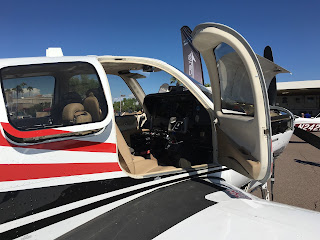
Beechcraft brought 2 planes with them. First was the G36 Bonanza. The 36 has not changed much over the years. It still carries 74 gallons of useable fuel and only comes with a non turbo engine. The price has gone up from $600,000 to now $800,000. It is a stable plane for IFR and comes with Garmin G1000 avionics.


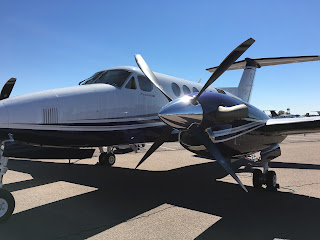
Beech also brought the granddaddy of twin turbo props the King Air 350. This plane weighs over 12,500 pounds and requires a type rating. This is an excellent airplane filling many mission profiles.
Cirrus brought one plane with them. The new Cirrus loaded is now $1 million for a single engine turbocharged prop with a ballistic chute.

Kodiak brought their turbo prop on floats. (No picture)
Eclipse had their 550 twin fanjet. This is a 6 passenger jet with a 1000 mile range.

Cessna had the most models on display.
First was a load hauling Turbo 206. This is a great airplane for tourism and hauling a family with gear. It is not fast but will haul a load and is an easy plane to fly. The passenger entry and exit is very easy.

Next is a low wing carbon fiber TTx. The TTx is a loaded airplane with a/c, airbrakes (spoilers) and the Garmin G2000. Of all the prop planes the TTx is the only airplane that has the G2000. It is a simple affair with an IPhone like panel just before the console. If you want to go to Com, just touch Com and then touch in the frequency. Same for VOR, Transponder code etc. This plane sells for $800,000 with Flight Into Know Ice (FIKI) approval. They also offer a non FIKI model for $750,000 which includes a 1/2 wing of TKS protection or Thermal wing protection.


This is the Cessna Caravan turbo prop with added luggage pods on the belly. This plane is not pressurized, slow cruise at 160 knots, but it will haul anything including the kitchen sink! Prices vary by model and options.

The last offering from Cessna was the M2 fanjet. This replaces the CJ, CJ1 and CJ1plus in the Cessna line. It is a lot nicer than the 525 CJ that I flew. It has the Garmin G3000 and beautiful leather interior. The M2 is what I refer to as a regional plane with 1300 mile range. The CJ I flew I affectionally refer to as the 152 of jets. It is that easy to fly. Cost $4.5 million.


I saved my favorite plane until last. If I had the money this plane would best fit my profile mission. It is the Piper Mirage going for $1.3 million. The Mirage is a 6 place pressurized piston turbocharged airplane with an approximate range of 1,300 miles. The ceiling is 25,000 feet, and what I love is that I could fly over the top of 95% of the traffic without have to use oxygen. It has airbrakes to help in the descent without having to pull the power back too far preventing shock cooling the engine. Piper uses boots for deicing, which I like as I would not have to clean up the mess that TKS makes.

It is nice to dream. I could not buy any of these planes unless I won the Powerball Lottery. I had a great couple of days talking to Reps I knew from the past and meeting new Reps. I thank them for the time they gave me, and I enjoyed every minute of being there. It is nice to dream.
Found out after publishing this, that there were 2 different Air Displays at SDL, and they are not associated. Would like to thank Brian for his gracious email that is listed below for pointing this out.
Several manufacturers were on display:
Carbon Cub
Mooney
Beechcraft
Cessna
Cirrus
Piper
Epic
Kodiak
TBM
Pilatus
Eclipse
The Carbon Cub LSA did not garner much attention as most gravitated to the more expensive "go" airplanes. With 180 horsepower and 21 gallons of fuel you cannot go far in the Cub. $180,000.

Mooney showed the Acclaim, a fast single engine plane. Mooney has had numerous financial problems and this plane did not have a crowd around it when I was there Friday and Saturday.

Epic is a single engine carbon fiber turbo prop asking price of $2.9 million at this time. Delivery is slated for late 2016 to 2017 if approved. It is a tough buy as you do not know their financial status, and if they will be around to service the airplane after delivery.

TBM was represented by their 900 turbo prop.

Rounding out the single engine turbo props was the Pilatus, which is the largest of the single engine turbo props.

Beechcraft brought 2 planes with them. First was the G36 Bonanza. The 36 has not changed much over the years. It still carries 74 gallons of useable fuel and only comes with a non turbo engine. The price has gone up from $600,000 to now $800,000. It is a stable plane for IFR and comes with Garmin G1000 avionics.


Beech also brought the granddaddy of twin turbo props the King Air 350. This plane weighs over 12,500 pounds and requires a type rating. This is an excellent airplane filling many mission profiles.

Cirrus brought one plane with them. The new Cirrus loaded is now $1 million for a single engine turbocharged prop with a ballistic chute.

Kodiak brought their turbo prop on floats. (No picture)
Eclipse had their 550 twin fanjet. This is a 6 passenger jet with a 1000 mile range.

Cessna had the most models on display.
First was a load hauling Turbo 206. This is a great airplane for tourism and hauling a family with gear. It is not fast but will haul a load and is an easy plane to fly. The passenger entry and exit is very easy.

Next is a low wing carbon fiber TTx. The TTx is a loaded airplane with a/c, airbrakes (spoilers) and the Garmin G2000. Of all the prop planes the TTx is the only airplane that has the G2000. It is a simple affair with an IPhone like panel just before the console. If you want to go to Com, just touch Com and then touch in the frequency. Same for VOR, Transponder code etc. This plane sells for $800,000 with Flight Into Know Ice (FIKI) approval. They also offer a non FIKI model for $750,000 which includes a 1/2 wing of TKS protection or Thermal wing protection.


This is the Cessna Caravan turbo prop with added luggage pods on the belly. This plane is not pressurized, slow cruise at 160 knots, but it will haul anything including the kitchen sink! Prices vary by model and options.

The last offering from Cessna was the M2 fanjet. This replaces the CJ, CJ1 and CJ1plus in the Cessna line. It is a lot nicer than the 525 CJ that I flew. It has the Garmin G3000 and beautiful leather interior. The M2 is what I refer to as a regional plane with 1300 mile range. The CJ I flew I affectionally refer to as the 152 of jets. It is that easy to fly. Cost $4.5 million.


I saved my favorite plane until last. If I had the money this plane would best fit my profile mission. It is the Piper Mirage going for $1.3 million. The Mirage is a 6 place pressurized piston turbocharged airplane with an approximate range of 1,300 miles. The ceiling is 25,000 feet, and what I love is that I could fly over the top of 95% of the traffic without have to use oxygen. It has airbrakes to help in the descent without having to pull the power back too far preventing shock cooling the engine. Piper uses boots for deicing, which I like as I would not have to clean up the mess that TKS makes.

It is nice to dream. I could not buy any of these planes unless I won the Powerball Lottery. I had a great couple of days talking to Reps I knew from the past and meeting new Reps. I thank them for the time they gave me, and I enjoyed every minute of being there. It is nice to dream.
Found out after publishing this, that there were 2 different Air Displays at SDL, and they are not associated. Would like to thank Brian for his gracious email that is listed below for pointing this out.
Hello Art
Thanks for coming out to be expo this weekend. It was nice to visit with you. I received an email from a colleague with some excerpts of an email that you had sent out. While I appreciate the write up, I just wanted to point out a discrepancy.
The Arizona Aircraft Expo has never had an affiliation with the Porsche Jet Preview. We are an event for aviation enthusiasts and prospective buyers. In our earlier years we had two additional venues around the state. This has changed in recent years to a single annual event in Scottsdale. This past weekend was our 8th year. We also have annual events in California (two in Southern California and another in Northern Cal). Again, no relation to the Porsche show.
Please let me know if you have any additional question and thanks again for attending.
Brian
Subscribe to:
Posts (Atom)